curbside URBANISM - Ideas for vacancy
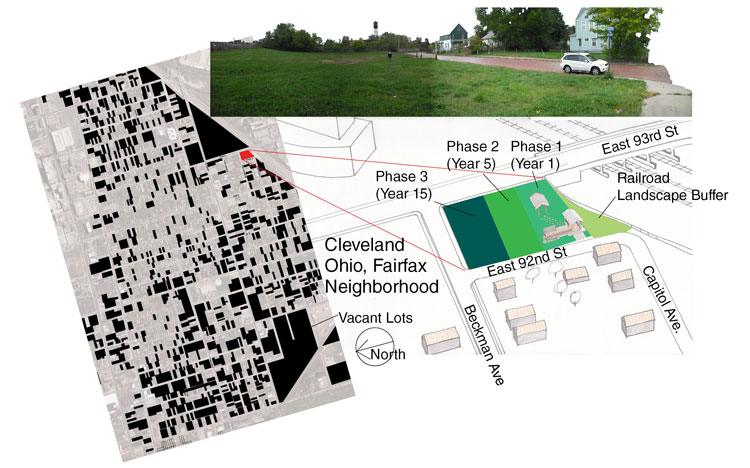
Cleveland is currently experiencing and may for some time to come, a shrinking population. The reduction in population has led to vacant properties and communities trying to fight their spread. The Fairfax neighborhood, like many Cleveland neighborhoods, has been losing residents steadily for the last twenty years. Currently, approximately 40-50% of the land has been either cleared or has vacant homes on the property. Vacant lands and housing has negative effects on the value of surrounding homes leading to a devaluing of the neighborhood in total.
Curbside Urbanism aims to raise questions about how –
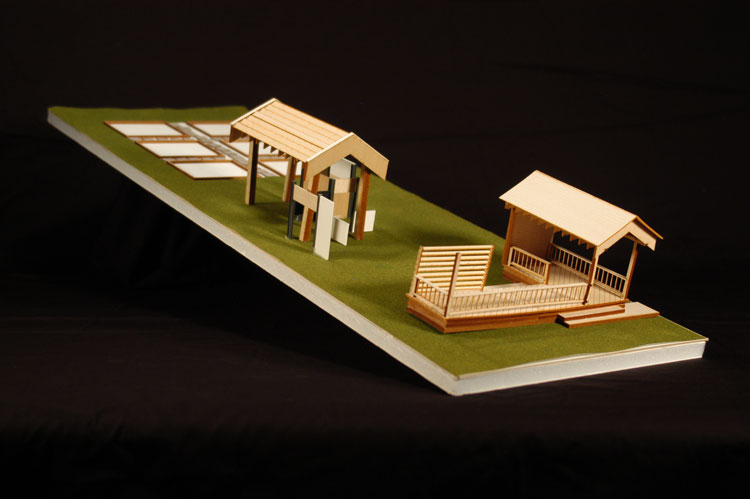
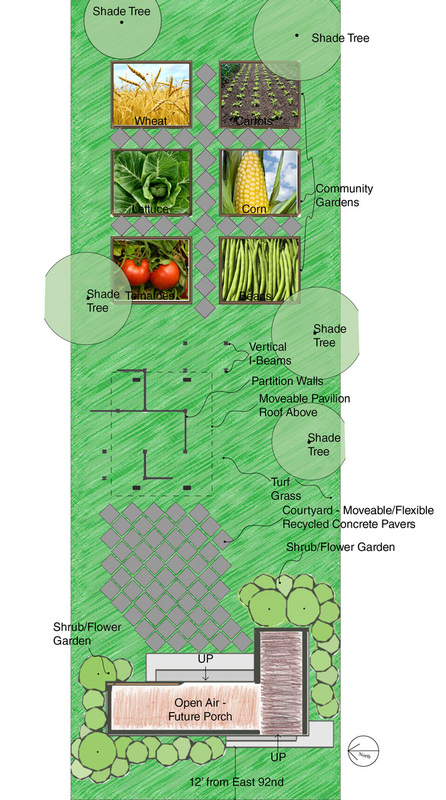
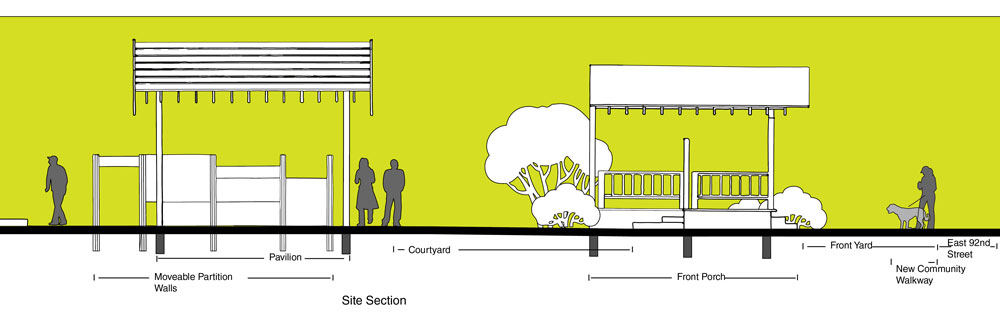
What is proposed is two pavilions; one stationary pavilion, a future porch to a single family detached residence and one movable pavilion.
The stationary pavilion is a permanent structure that suggests the future potential for the addition of a home. While not defining how the future development will take shape the pavilion provides a base understanding land usage. Functioning in its current form as the gateway and entry to the site, as it will function in the future for its homeowner.
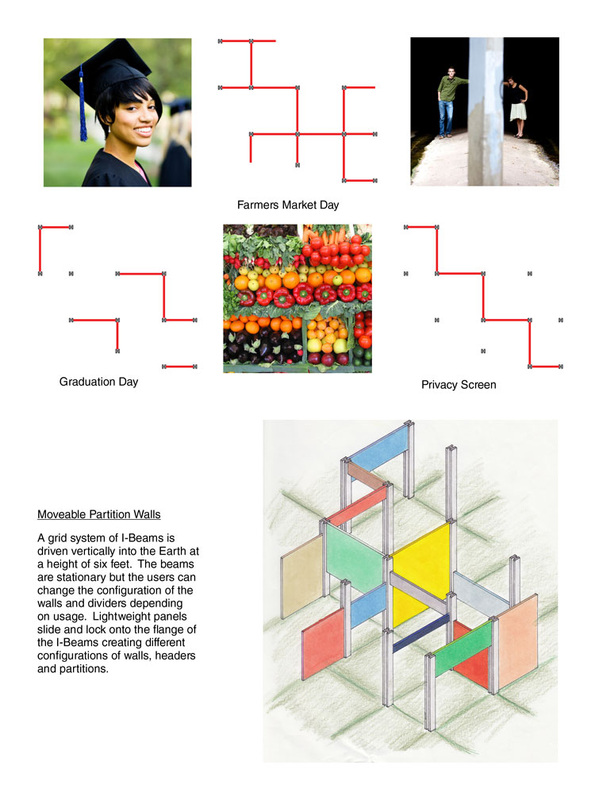
The moveable pavilion provides the central experience of the site in its current form. The canopied living room is a simple wood structure that can be converted into building materials or moved to future sites for repeated use. Functioning as the main gathering space the traditional structure provides a visual suggestion to the form of a future home.
In simplest terms Curbside Urbanism is a suggestion of the future. It is a pair of structures working in tandem to provide the needs of today and tomorrow.
Curbside Urbanism aims to raise questions about how –
- To change the visual perceptions of vacant lots
- Increase value both monetarily and intrinsically for the current and future residents
- Provide micro-scale changes that can led the community to make macro-scale changes
- And finally to create current positive land use changes within the community
What is proposed is two pavilions; one stationary pavilion, a future porch to a single family detached residence and one movable pavilion.
The stationary pavilion is a permanent structure that suggests the future potential for the addition of a home. While not defining how the future development will take shape the pavilion provides a base understanding land usage. Functioning in its current form as the gateway and entry to the site, as it will function in the future for its homeowner.
The moveable pavilion provides the central experience of the site in its current form. The canopied living room is a simple wood structure that can be converted into building materials or moved to future sites for repeated use. Functioning as the main gathering space the traditional structure provides a visual suggestion to the form of a future home.
In simplest terms Curbside Urbanism is a suggestion of the future. It is a pair of structures working in tandem to provide the needs of today and tomorrow.